Journal · No. 02
How to frame & display 10×10 photography.
The 10×10 square format is quiet, balanced, and unusually versatile on a wall. This guide covers the archival materials that protect the print and the layout decisions that help it read as art rather than décor.
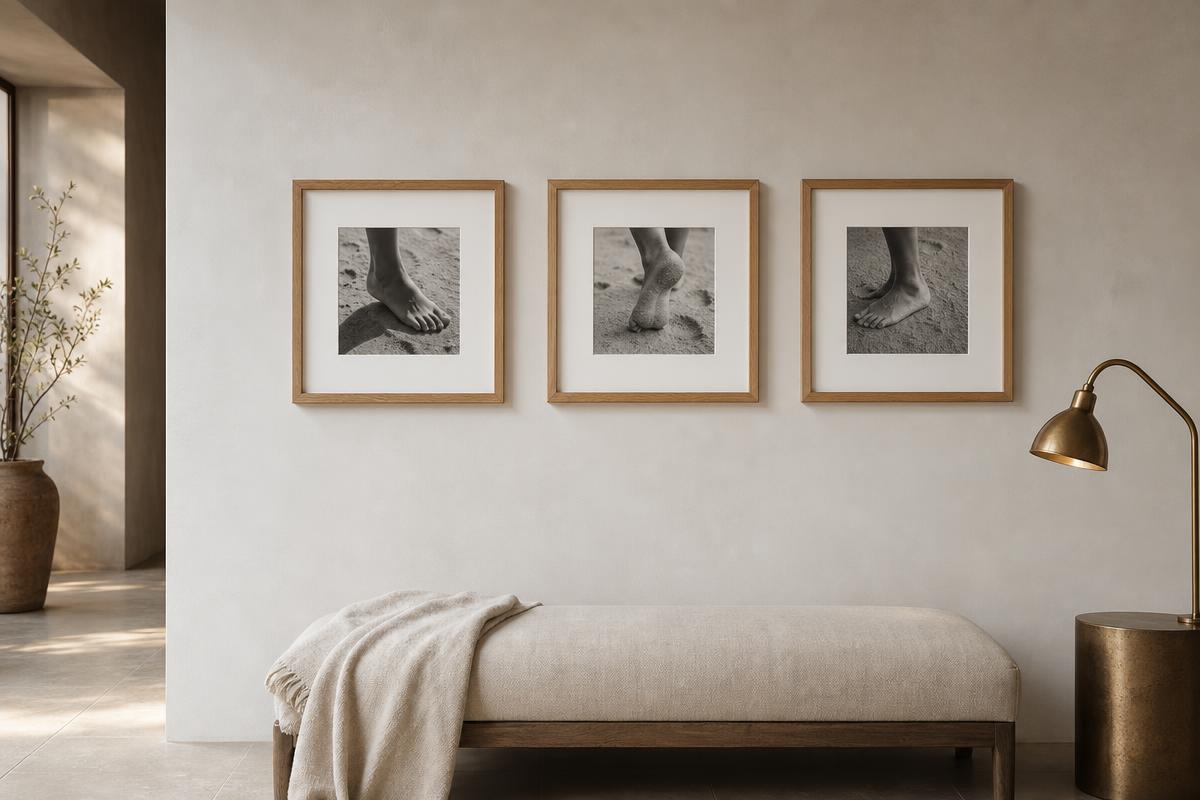
A 10×10 triptych in warm oak, evenly spaced above a low bench.
Start with the frame size
A 10×10 inch print can be framed two ways. The first is a full-bleed 10×10 frame, where the image runs to the inner edge of the moulding. This is clean and contemporary, but it leaves no physical breathing room between the print and the frame.
The second — and the choice most collectors prefer — is a larger outer frame with a mat. A 16×16 inch outer frame with a 3-inch mat border places the 10×10 image in a generous 12×12 inch window. That extra margin draws the eye inward and gives the photograph the presence of a museum piece.
Glazing: UV-filtering glass or acrylic
Light is the slow enemy of any photograph. Pigment inks on archival paper are rated for decades, but only when they are protected from UV exposure. Conservation glazing comes in two practical forms:
- UV-filtering glass
- Heavier and more reflective than acrylic, but harder to scratch and easier to keep dust-free. Best for smaller pieces and controlled indoor light. Look for 99% UV blocking or "conservation clear" grade.
- UV-filtering acrylic
- Lighter and shatter-resistant, which makes it safer for large pieces and shipping. Anti-reflective coatings reduce glare significantly. Static can attract dust, so clean it with a microfiber cloth and acrylic-safe cleaner.
Avoid standard picture glass. It offers no UV protection and can trap moisture against the print surface.
Mat board: acid-free is non-negotiable
The mat does more than create space. It separates the print from the glazing, allowing air to circulate and preventing the image from sticking to the glass over time. It also sets the tonal context for the photograph.
For archival framing, the mat must be acid-free and lignin-free. Cotton rag mat board is the gold standard. A warm white or soft museum board works with most black-and-white photography; a cool white can feel clinical, while a cream can shift the tonal reading of the print.
Never use a decorative paper mat or a mat cut from craft board. The acids in these materials migrate into the print and cause irreversible yellowing within a few years.
Backing and hinging
The print should be mounted with archival hinging tape — Japanese paper hinges and wheat starch paste, or acid-free linen tape — rather than dry-mounting or spray adhesive. Dry-mounting is permanent and can cause the paper to crack as it ages.
Behind the print, use acid-free backing board. A sealed dust cover on the reverse of the frame keeps out insects and airborne pollutants.
Gallery wall layouts for 10×10 prints
The square format is forgiving. It reads well in a strict grid, a linear row, or a loose salon-style arrangement. The key is consistent spacing.
- The horizontal triptych. Three 10×10 frames in a row, 2 to 3 inches apart on center, hung at eye level. This is the most direct way to treat a series as a single statement.
- The 2×2 grid. Four prints arranged in a square. Use identical frames and mats, and keep the gap between frames equal to the width of the mat border — typically 3 inches — so the negative space echoes the composition.
- The vertical pair. Two 10×10 frames stacked one above the other. Works beautifully in narrow spaces such as hallways or beside a door.
- Salon cluster. Mix 10×10 prints with larger pieces, keeping one common element — frame finish, mat tone, or image palette — so the grouping feels intentional rather than accidental.
A practical rule: the center of any single frame should sit roughly 57 to 60 inches from the floor, which is the average eye level in a standing gallery.
Lighting the wall
Even the best glazing cannot fully compensate for direct sunlight. Hang prints away from windows, or use curtains and UV film. For artificial light, LED picture lights with a color temperature of 2700K to 3000K and a CRI above 90 will render the tones faithfully without emitting damaging UV.
What pho-toe prints arrive as
Each pho-toe edition ships as a 10×10 inch archival pigment print on premium luster photo paper, ready to frame. The print is not mounted, which lets you or your framer choose the mat and moulding that suit your wall. Read the full print specification on the process page, or browse the current gallery.
Next
Learn how the prints are made → Archival standards guide